
Mental health is the most important part of overall well-being, yet many people struggle to find the right treatment. Two widely recognized and effective therapies are Cognitive Behavioral Therapy (CBT) and Dialectical Behavior Therapy (DBT). Both approaches help individuals manage mental health challenges, but understanding their differences is crucial in choosing the right therapy. For those seeking DBT vs CBT therapy in Delhi NCR and Gurgaon, finding the right professional support can make a significant difference in overall emotional well-being.
What Is Cognitive Behavioral Therapy?
Cognitive Behavioral Therapy (CBT) is a structured, evidence-based psychotherapy that focuses on identifying and changing negative thought patterns and behaviors. It is goal-oriented and designed to help individuals develop practical strategies to cope with challenges such as anxiety, depression, OCD, and phobias.
Who Benefits Most From CBT?
CBT is highly effective for individuals dealing with:
- Depression and anxiety disorders
- Phobias and panic attacks
- Obsessive-compulsive disorder (OCD)
- Behavioral and personality disorders
Residents of Delhi NCR and Gurgaon often seek CBT for its short-term, structured approach that delivers measurable results.
Principles of CBT
CBT is grounded in the principle that thoughts, feelings, and behaviors are interconnected. By changing negative thought patterns, individuals can improve their emotional regulation and behavior. Core principles include:
- Awareness of automatic thoughts
- Challenging cognitive distortions
- Developing problem-solving skills
- Practicing behavioral experiments
Techniques in CBT
CBT employs various techniques tailored to individual needs, such as:
- Cognitive restructuring – identifying and challenging unhelpful thoughts
- Behavioral activation – engaging in activities to improve mood
- Exposure therapy – gradually confronting feared situations
- Relaxation techniques – managing stress and anxiety
What Is Dialectical Behavior Therapy?
Dialectical Behavior Therapy (DBT) is a type of cognitive-behavioral therapy developed to treat emotional dysregulation, often in individuals with borderline personality disorder. DBT emphasizes mindfulness, acceptance, and the balance between change and validation, helping individuals develop emotional resilience.
Who Benefits Most From DBT?
DBT is particularly effective for people struggling with:
- Emotional instability and intense mood swings
- Self-harm behaviors or suicidal thoughts
- Chronic depression and anxiety
- Interpersonal relationship challenges
In Delhi NCR and Gurgaon, DBT is sought after for its structured group and individual therapy sessions that teach coping mechanisms and emotional regulation.
Principles of DBT
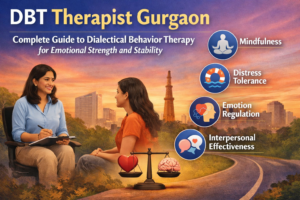
The key principles of DBT include:
- Mindfulness – focusing on the present moment
- Distress tolerance – handling crises without harmful behaviors
- Emotion regulation – understanding and managing emotions effectively
- Interpersonal effectiveness – improving communication and relationships.
Techniques in DBT
DBT combines cognitive-behavioral strategies with mindfulness techniques:
- Mindfulness exercises – increasing awareness and focus
- Emotion regulation skills – identifying and altering extreme emotional responses
- Interpersonal effectiveness training – asserting needs while maintaining relationships
- Crisis survival strategies – techniques to manage intense emotions
Comparing CBT and DBT
Similarities
- Both are evidence-based therapies
- Focus on changing unhelpful thoughts and behaviors
- Use structured, goal-oriented sessions
- Promote self-awareness and skill development
Differences Between CBT and DBT

Effectiveness of CBT and DBT
Success Rate of CBT
CBT has been extensively studied and demonstrates high success rates in managing anxiety disorders, depression, OCD, and phobias. Patients in Delhi NCR and Gurgaon often report noticeable improvements within 8–12 weeks of consistent therapy.
Success Rate of DBT
DBT is highly effective for individuals with severe emotional dysregulation, self-harm tendencies, and borderline personality disorder. Studies show that structured DBT programs significantly reduce self-harm incidents and improve emotional stability over time.
How to Work With a Therapist to Choose the Right Treatment Option
Choosing between CBT and DBT requires professional guidance. Here’s how you can approach it:
- Initial Assessment – A qualified psychologist evaluates your mental health needs.
- Goal Setting – Define therapy goals with measurable outcomes.
- Trial Sessions – Attend a few sessions to determine compatibility.
- Feedback and Adjustment – Regularly discuss progress and adjust therapy strategies.
For individuals in Delhi NCR and Gurgaon, working with an experienced clinical psychologist ensures a tailored therapy plan that aligns with personal challenges and mental health goals.
Find Support at Gray Cells Matter
At Gray Cells Matter, we provide compassionate, professional mental health care for residents of Delhi NCR and Gurgaon. Our team specializes in CBT, DBT, and other evidence-based therapies to support individuals navigating anxiety, depression, OCD, and behavioral disorders.
About Aparna Gupta


Aparna Gupta is the founder and owner of Gray Cells Matter. She is a warm and compassionate licensed clinical psychologist with over 15 years of experience in India and abroad.
Trained under eminent psychologist Dr. Andrew Beck, NHS, UK, she is also a certified hypnotherapist and licensed CBT supervisor and practitioner.
Aparna deals with a wide range of mental health challenges, including dementia, addiction, schizophrenia, delusional disorder, bipolar disorder, depression, anxiety, phobias, panic, OCD, somatoform disorders, behavioral disorders, personality disorders, and relationship counseling.
In addition to her clinical expertise, Aparna is a licensed special educator, author, and speaker at Family Outreach International and the Indian High Commission, Ghana. Her holistic approach emphasizes empathy, evidence-based practice, and personalized care.
FAQs
1. Which therapy works faster, CBT or DBT?
CBT is typically short-term and shows results within 8–12 weeks, while DBT may take longer due to its focus on emotional regulation and long-term behavior change.
2. Is CBT available in Delhi NCR and Gurgaon?
Yes, several clinics in Delhi NCR and Gurgaon, including Gray Cells Matter, offer CBT with licensed therapists.
3. Can I switch from CBT to DBT if needed?
Absolutely. A professional assessment can determine if switching or combining therapies is beneficial based on individual needs.
4. Are CBT and DBT suitable for all age groups?
Both therapies are adaptable and can be applied to adolescents, adults, and older adults with tailored approaches.