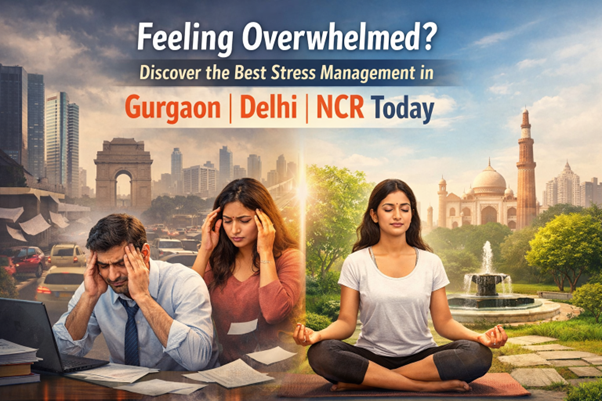

Life in a fast-moving region like Gurgaon, Delhi, and the wider NCR often feels like a constant race against time. Many people wake up already feeling tired, rush through traffic, deal with work pressure, family duties, financial worries, and then go to bed with a restless mind. Over time, this busy routine slowly starts to affect emotional health. That is why stress management in Delhi NCR, especially in cities like Gurgaon and Delhi, has become an important part of living a balanced and healthy life.
In urban areas such as Gurgaon, where corporate work culture is intense, long hours and tight deadlines are common. In Delhi, daily travel, crowded places, social pressure, and fast lifestyles create their own mental load. Across the NCR region, people face similar emotional challenges that slowly build into stress if not managed in time. Many people accept stress as normal, but when it continues for months or years, it can quietly damage mental and physical health.
Stress does not always show itself clearly. It can start with small signs such as poor sleep, headaches, irritation, lack of focus, or feeling tired all the time. When these signs are ignored, they slowly grow into anxiety, sadness, anger, or emotional exhaustion. Managing stress early helps people protect their mental and physical health and continue to live a more peaceful life.
Understanding Stress and Its Impact
Stress is the body’s natural response to any challenge or pressure. When a person faces a problem, the brain releases stress hormones that prepare the body to react. This response increases heart rate, sharpens attention, and gives extra energy for a short time. This is helpful in emergencies, but when it stays active for long periods, it becomes harmful.
In busy cities like Gurgaon and Delhi, people are constantly exposed to stress. Deadlines, traffic, responsibilities, and social expectations keep the brain in alert mode. When the stress response never turns off, the body and mind do not get enough time to recover.
Why the Stress Response Becomes Harmful
In fast-paced environments like Delhi NCR, people rarely get proper mental rest. Work calls, emails, social demands, and family responsibilities often continue even after office hours. Because of this, the body stays in stress mode for too long. This leads to tiredness, muscle tension, mood changes, and poor concentration.
Over time, the brain becomes more sensitive to stress. Situations that were once easy to handle start to feel heavy and difficult. People may feel overwhelmed, anxious, or emotionally drained without understanding why.
Why Stress Levels Are High in Gurgaon, Delhi, and NCR
The NCR region offers many opportunities for growth, but it also creates pressure.
- Lifestyle Pressure
In Gurgaon, many people work in corporate offices with long hours and high performance expectations. Meetings, targets, and deadlines can create constant tension. In Delhi, people often balance professional life with family duties and social responsibilities. Students across NCR face strong competition in academics and career planning. This ongoing push to perform better creates mental strain.
People often feel they must always be productive and successful. When they cannot meet their own or society’s expectations, they feel stress and self-doubt.
- Environmental and Social Factors
Heavy traffic, pollution, noise, and crowded public spaces make it hard for the mind to relax. Even simple daily activities like traveling to work can feel exhausting. Social media also adds pressure by making people compare their lives, careers, and lifestyles with others. This comparison increases feelings of stress and dissatisfaction.
How Stress Affects Mental and Physical Health
Stress affects both the mind and the body.
- Mental Effects of Stress
When a person is under constant stress, the mind becomes busy with worry and negative thoughts. Overthinking, fear, and self-doubt become common. It becomes harder to focus, make decisions, and enjoy daily activities. Over time, people may feel emotionally weak, confused, or disconnected from themselves.
- Physical Effects of Stress
Stress also shows up in the body. Many people experience headaches, stomach problems, muscle pain, fatigue, and sleep issues. In cities like Gurgaon and Delhi, late nights, long work hours, and irregular routines make these problems worse. When the body does not get proper rest, stress increases even more.
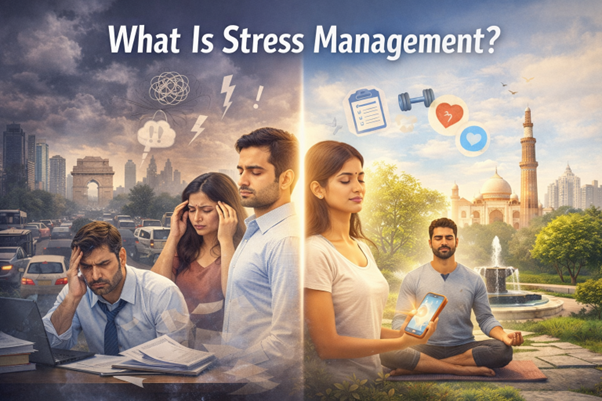
What Is Stress Management?
Stress management means learning how to understand stress and deal with it in a healthy way. It is not about avoiding problems. It is about learning how to respond calmly and wisely to challenges.
Stress management helps people become more aware of their thoughts, emotions, and reactions. It teaches skills that make it easier to stay calm, clear, and balanced even during difficult times.
How Stress Management Works
- Identifying Stress Patterns
Everyone experiences stress differently. Some people become anxious, others feel angry, tired, or emotionally numb. Identifying your own stress pattern helps you understand what your body and mind need.
- Understanding Thought Triggers
Stress is often created by negative thinking such as fear, self-criticism, or unrealistic expectations. Learning to notice and change these thoughts reduces emotional pressure.
Emotional Processing
Unexpressed emotions such as sadness, frustration, and disappointment build tension inside the body. Stress management allows people to understand and release these feelings in a healthy way.
Learning Coping Skills
People learn simple and practical ways to handle stress, such as breathing techniques, emotional control, and problem-solving. These skills help prevent stress from becoming overwhelming.
Lifestyle Habits That Support Stress Management
- Physical Activity
Regular movement helps release stress from the body. Exercise improves mood, reduces anxiety, and increases energy. Even walking or stretching can help calm the mind.
- Sleep and Rest
Good sleep is important for emotional health. When the body rests properly, the brain handles stress better.
- Balanced Routine
A simple and organized daily routine gives the mind a sense of control. This makes life in Delhi NCR feel more manageable.
Conclusion
Life in Gurgaon, Delhi, and NCR can be demanding, but stress does not have to control your life. With the right understanding, habits, and emotional skills, people can stay calm, focused, and mentally strong even in a busy city environment.